I drove to Mineral Wells to break bread with an old friend I haven’t seen in a while. For once, traffic was great. However, one couple ahead of me riding a motorcycle freaked me out: every time they passed an 18-wheeler, they literally swerved so close that both would touch the trailers with their hands, as if they were high-fiving the rolling objects.
My friend told me that his high school-aged daughter often gets paid to dog-sit a healthy doggy for three hours.
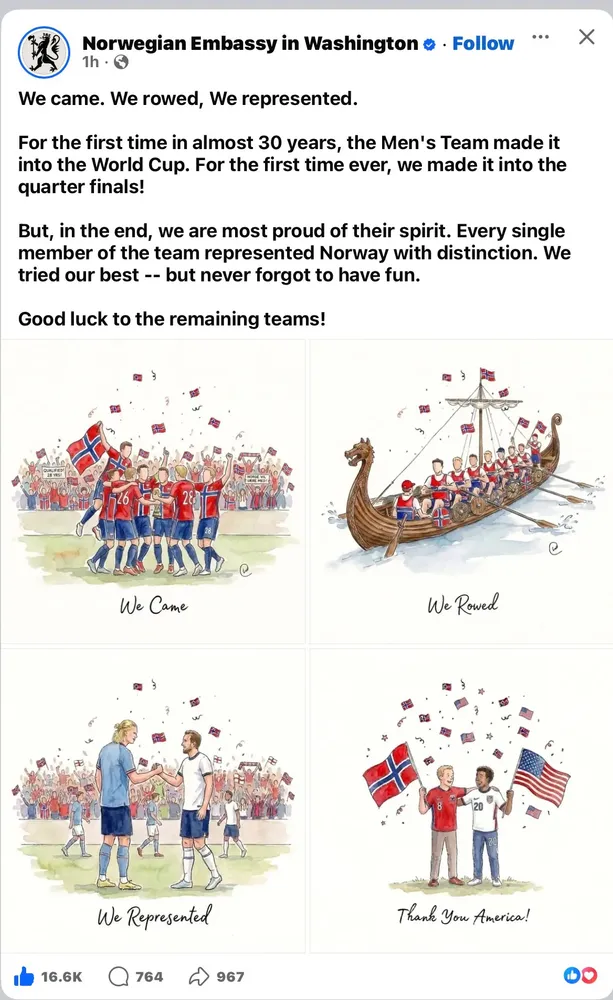
A lot of folks fell for this AI-generated video. And surely the Minnesota Vikings and their fans will incorporate rowing as a part of their game experience.
The Norwegian fans may be rowing home on the baggage carousel… 🚣🇳🇴😂
But what a World Cup you gave us. You brought color, passion, smiles and unforgettable moments wherever you went. ❤️
And your team… thank you for the football and the memories. It was a joy to watch. Safe… pic.twitter.com/Uqkqv40uYq— SoofsLab (@StaySoof) July 12, 2026
The cigarette lighter in cars was originally designed for cigars.
The electrical cigar-lighter was invented and patented in the early 1880s by the Swiss-Austrian inventor Friedrich Wilhelm Schindler. In the 1890s, these tools were sold as electrical cigar lighters in the major German warehouse catalogues. Before the Great Depression, cigarettes overtook cigars in sales, and they became more popularly known as “cigarette lighters”, though they have remained the diameter of a standard cigar of 21 millimetres (0.83 in), or a 52 ring gauge.
Senators celebrate bipartisan housing bill becoming law despite Trump’s refusal to sign
I learned a lot of folks weren’t aware of the 10-day rule and thought it always takes the president’s signature for a bill to become law. So, in case you are wondering why there’s a 10-day rule (Sundays excepted), it’s because the Framers wanted it that way, as it prevents a president from killing a bill just by ignoring it indefinitely. Most state constitutions are also designed this way.
Once Congress passes a bill and sends it to the president, he has three options:
- Sign it; and then it becomes law.
- Veto it. He sends it back to Congress with objections, and Congress can override with a two-thirds vote in both chambers.
- Do nothing. If the president declines to sign or veto it, it becomes law without his signature, as long as Congress remains in session.
This reflects where the framers put the burden of proof. They’d just fought a revolution against unchecked executive power, and Congress was designed as the branch closest to the people. So the default was built to favor the legislature: if the president won’t affirmatively object, his silence isn’t allowed to function as a kill switch. He has to spend political capital to actually veto something and explain why, in writing, to Congress.
The one carve-out — if Congress adjourns during the ten days, the bill dies instead of becoming law — exists for a practical reason: a veto is supposed to come with a formal objection message the president sends back to the originating chamber for reconsideration. If Congress isn’t around to receive it, that mechanism breaks down. So the framers decided silence should only count as approval when Congress is actually in session and available to respond.
I’m not sure why the FBI needs to be involved for an aorta tear.
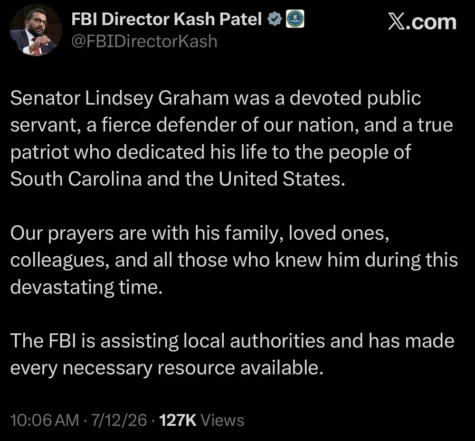
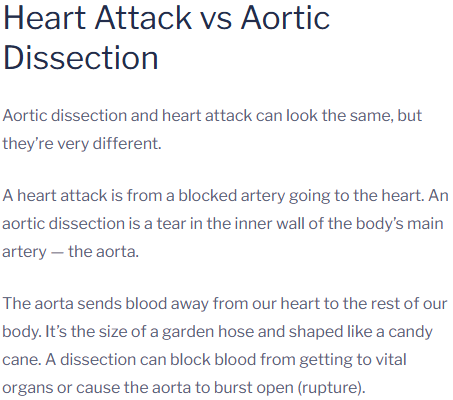
If you hear anyone saying that Graham had a heart attack, they are dead wrong. An aortic tear is not a heart attack.
Graham was a simple, tragic man to understand. He was a much better senator when John McCain was around. When McCain died, he lost his moral compass.
Whatever happened to this version of Lindsey Graham? pic.twitter.com/wF3oD2OBF1
— Warren (@swd2) July 12, 2026
It took the surprising death of Senator Lindsey Graham for Senator Mitch McConnell’s team to better address the public about his long hospital stay. Sheesh. Thankfully, the public is now better informed about this important public servant’s status. It just shouldn’t have taken so long and so much to make this happen. It’s funny how they have him holding a newspaper to try to dispel any notion that it’s not a current photo.
In the release, McConnell says, “Surviving childhood polio meant spending my entire life with mobility challenges. They haven’t exactly gotten easier to manage with age. And last month, I took a fall which landed me in the hospital.”
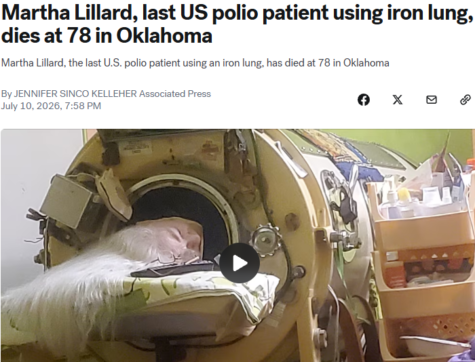
In an odd bit of coincidence, this was also reported yesterday: