In short . . . sit in the back. Link
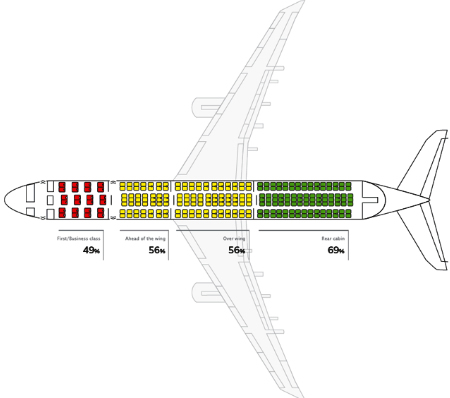
But it was this pic that caught my attention.

Surgeons worked Thursday to save a 74-year-old Oakland man’s life — and abide by his religious conviction — as they performed emergency open-heart surgery without giving him a blood transfusion.
As a Jehovah’s Witness, LeRoy Grant believes the Bible forbids blood transfusions. He felt he could not compromise his beliefs.
“If I violate God’s law on blood simply to gain a few more days — or years — of life, I would be dead spiritually, and my relationship with God would be damaged beyond repair,” Grant said recently at his home.
Such a belief once meant almost certain death, but Grant was recuperating late Thursday after the four-hour procedure. Medical technology has advanced to the point that many doctors believe surgeries without blood transfusions should become the norm.
The so-called “bloodless” surgeries use drugs to raise blood counts before an operation and limit blood loss during it. A “cell-saver” machine also allows physicians to collect pooling blood during surgery, wash it and infuse it back into the body intravenously.
The United States will have a female president next year — on the Fox TV series “24.”
Tony Award-winning actress Cherry Jones will play President Allison Taylor when the show about the exploits of counterterrorism agent Jack Bauer (Kiefer Sutherland) returns in January for its seventh season, the network announced Sunday.

Ripping open one of four waist-high cardboard boxes on a cargo bay here, Steve Ekin pulled out corkscrews, pocketknives and assorted hand tools before finding an electric impact drill as long as his arm. “You’d think people would know better,” he said.
The original price tag, still on the drill, read $170. Mr. Ekin planned to sell it for about $15 at a store opened last October in a warehouse district northeast of Atlanta. He’s the director of Georgia’s Surplus Property Division, the agency in charge of selling the government’s used belongings. These days, he’s also selling the items that trigger alarms at security checkpoints at nearby Hartsfield-Jackson Atlanta International Airport, the world’s busiest in terms of passengers and flights.
Nearly six years after the Sept. 11, 2001, terrorist attacks — and a blitz of government marketing about what is and isn’t allowed — thousands of travelers still attempt to board aircraft with scissors, awls, hammers and saws. They even try to carry on box cutters, the weapons apparently used by some of the 9/11 attackers to commandeer and crash four planes.
Some states trash or destroy some of the items, along with the shampoos, toothpaste and other gels and liquids banned in large amounts after a British bomb scare last August.
But many states now sell the banned objects and keep the proceeds. Alabama, Arkansas and Illinois tout them online. Kentucky enjoys a cottage industry in Internet sales of miniature Louisville Sluggers surrendered after factory tours in the baseball bats’ hometown. Pennsylvania, which collects goods at 13 airports including New York’s John F. Kennedy International Airport, says it collects a total of 2.5 tons of TSA goods a month and that the items, sold on eBay, since 2004 have raised $360,000 for state coffers, as of June.