Mike Wood didn’t intend on slowing motorists north of West Salem — he was just trying to advertise his business.But as luck would have it, Wood was able to do both.
The owner of Mike’s Sign Factory located on state Route 301 in West Salem, Wood reproduced life-size cutouts of his children and grandchildren and placed them in his front yard to show passing drivers what his business is capable of.
“It was really all by accident,” said Wood, who’s lived in West Salem for 30 years. “We started making standups of our kids about a year ago and put them out by the road with a sign that said ‘Kids For Sale.’ Then we realized that as a side benefit because they looked so real, traffic was slowing down. We saw a show about a week ago on Channel 5 asking for suggestions on how to slow speeders, so I sent them an e-mail telling them what we did and five minutes later they got back with me wanting to do an interview.”

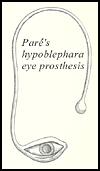 The eye was a symbol of life to the ancient world, particularly in Egypt, where bronze and precious stone eyes were placed on the deceased. The Romans decorated statues with artificial eyes made of silver. Ambrose Paré (1510-1590), a famous French surgeon, was the first to describe the use of artificial eyes to fit an eye socket. These pieces were made of gold and silver, and two types can be distinguished: ekblephara and hypoblephara, intended to be worn in front of or under the eyelids, respectively. A hypoblephara eye was designed to be used above an atrophic eye, as enucleation was not a common practice until the middle of the 1800s.

