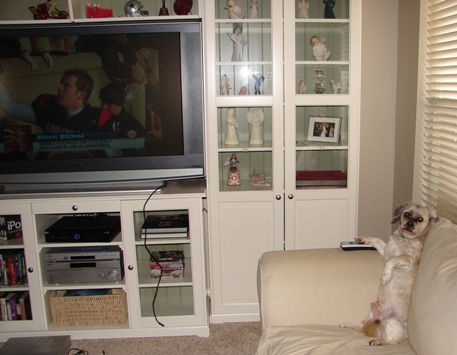
So this is what DogGeeding does when we leave the house
Posted in Goofy
3 Comments
A project launched last week aims to create what is in essence a medical Wikipedia, an online encyclopedia focused on explaining conditions, drugs, procedures, medial facilities and other medical topics written by physicians and PhDs.
The Medpedia Project launched a preview of the Medpedia site Wednesday with the support of medical heavyweights like Harvard Medical School, the Stanford School of Medicine, the University of Michigan Medial School and the University of California Berkeley School of Public Health.
These schools and other organizations have agreed to provide content and to urge their employees to sign up to be editors of the new site, which is scheduled to go live with 1,000 pages of information by the end of the year.
The site, which is built with the same open source software that runs Wikipedia, will be written and edited by volunteer medical doctors or experts with PhD degrees, noted James Currier, Medpedia’s founder and chairman. The site will provide profiles of each of each editor, including their background and areas of expertise, he added.
The volunteer editors will also have to disclose any compensation received from key outside entities like pharmaceutical companies. Experts can now apply on the site to be editors. Those selected will work with committees organized by specialties like pediatric oncology or dermatology to update and edit Medpedia Web pages.
 Scientists have photographed a giant gas bubble emanating from a whale, suggesting that flatulence is just as common for ocean mammals as it is for humans and many other terrestrial animals.
The picture, released last week by scientists from the Australian Antarctic Division (AAD) in Tasmania, was taken by the captain of a U.S. research ship the Nathaniel B. Palmer, while on expedition between Marguerite Bay and Palmer Station, Antarctica.
“The picture is of an Antarctic minke whale taken from the bow of a ship,” said AAD principal research scientist Dr Nick Gales. “The white bits in the photo are pieces of ice-floe, the stream of pinky colour behind the whale is a faecal plume – a.k.a. “poo” – the large circle in the water is indeed the physical eruption of the whale’s flatulence.”
He and his colleagues are working to determine what it is that higher marine predators eat, and where they go to eat it. Instead of resorting to killing whales, the Australian Antarctic Division scientists have developed a method that allows them to collect whale faeces and study its DNA to figure out what the whale recently consumed.
The DNA work is linked to whale protection, since countries such as Norway, Iceland, and Japan have argued that whale numbers should be reduced to stabilise commercial fishing stocks.